Building a Turo fleet isn't always about finding the newest or the flashiest cars. Often, it's about finding the "hidden gems"—those budget-friendly vehicles that rent for a decent daily rate but don't cost a fortune to buy.
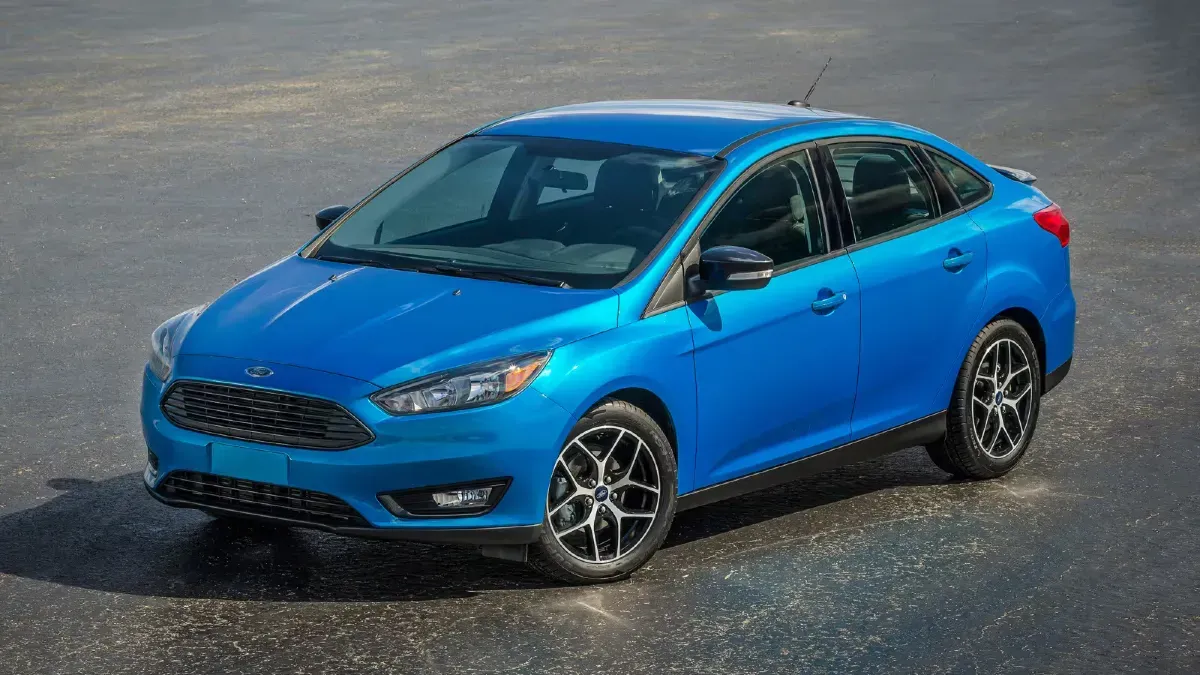
The Ford Focus (2012–2018) is a tempting target for many hosts.
On paper, it looks like a winner: it has sharp styling, a comfortable interior, and in 2025, you can often find them for thousands less than a comparable Toyota Corolla or Honda Civic.
But as any veteran Turo host will tell you, a cheap purchase price can be a trap. Let’s look at the ROI of the Ford Focus and see if this budget hatchback is a cash cow or a money pit.
The "Budget" Appeal of the Ford Focus
In 2025, the economy has pushed more renters toward the "Value" category on Turo. People are looking for reliable transportation that doesn't eat up their entire vacation budget. This is where the Focus shines.
- The Price Gap: You can often pick up a clean 2016 or 2017 Ford Focus for between $7,000 and $9,000.
- The Competition: A Toyota Corolla of the same year and mileage will likely cost you $12,000 to $14,000.
- The Earnings: On Turo, both cars usually rent for the same amount—roughly $40 to $50 per day.
If you look at the math alone, the Focus has a much higher "theoretical" ROI because your initial investment is lower. But that’s only if the car stays on the road.
The "Transmission Trap": A Warning for Hosts
We have to talk about the elephant in the room: the PowerShift Dual-Clutch Transmission (DCT).
The automatic transmission in the 2012–2018 Ford Focus is famous for all the wrong reasons. It’s prone to shuddering, slipping, and eventually failing altogether. Ford has faced multiple class-action lawsuits over this specific part, and even in 2025, it remains the #1 reason Focuses end up in the scrap heap.
Why this matters for your Turo business:
- The Review Penalty: If a guest picks up your car and it "shudders" every time they pull away from a stoplight, they are going to leave a bad review. Even if the car isn't "broken," it feels broken to a renter.
- The Maintenance Drain: A transmission replacement or even a clutch pack replacement on a Focus can cost $2,500 to $4,000. If you bought the car for $8,000, one major repair wipes out your entire profit for the year.
- National Backorders: Because so many of these fail, parts (especially the Transmission Control Module or TCM) are often on backorder. Your car could sit in a shop for months, earning zero dollars while you still pay for insurance.
The "Manual" Loophole
If you can find a Ford Focus with a manual transmission, the ROI story changes completely.
The manual versions are very reliable and fun to drive. However, there is a catch: fewer people know how to drive "stick" in 2025. This limits your pool of renters.
If you are in a market with a lot of enthusiasts or Europeans (like Orlando or Las Vegas), a manual Focus can be a profitable niche. For most hosts, however, it’s a "Slow Mover."
2025 Focus ROI Breakdown: The Real Numbers
Let’s look at the numbers for a typical 2017 Ford Focus SE Sedan:
- Purchase Cost: $8,500
- Projected Monthly Gross: $950 (at 22 days booked)
- Turo Take-Home (75% plan): $712
- Estimated Monthly Insurance/GPS: -$95
- Monthly Maintenance Reserve: -$150 (You must save more for a Ford)
- Net Monthly Profit: $467
The Break-Even Point: ~18 months. Compare this to the 8 months for a Toyota Yaris, and you can see that the "cheaper" Ford Focus actually takes much longer to pay for itself because it generally carries higher maintenance risks.
The Mechanics of the PowerShift Failure
To truly understand the risk, you have to understand what’s happening inside the car. Unlike a traditional automatic that uses fluid to change gears, the PowerShift is essentially a manual transmission operated by a computer.
In 2025, many of these cars have already had their clutches replaced at least once. The problem is that the replacement parts often fail just as quickly as the originals. Heat is the enemy here. If your Turo guests are driving in heavy stop-and-go traffic (like Los Angeles or Miami), the transmission gets hot, the sensors get confused, and the "shuddering" begins.
The "Grounding Mod" and Other DIY Fixes
Many Focus owners in the community swear by the "Grounding Mod". This involves sanding down the paint on the ground wires to ensure the car's electrical system has a clean connection.
Why does this matter for Turo? Poor electrical grounds can cause the TCM to send bad signals to the transmission, leading to those infamous jerks and slips. If you buy a Focus for your fleet, doing this $0 fix is the very first thing you should do.
Managing the Guest Experience
If you decide to run a Focus on Turo, your "Check-In" process needs to be different. You should proactively message your guests:
"Hi! Just a heads up—this car uses a unique 'Dual-Clutch' transmission. It might feel a little different than a standard automatic when you're pulling away from a stop. This is normal for this model!"
Setting expectations early can often save you from a 3-star review later.
The Current State of Warranties in 2025
By now, many 2012–2015 Focuses are reaching the end of the extended 10-year/150,000-mile warranty for the TCM (program 14M02). However, a few 2016 models and a one-time replacement program lasting through June 2025 still offer some protection.
If you buy a Focus that is just outside this window, you are on your own. Paying $4,000 for a transmission in a car worth $7,000 is a tough pill to swallow. Always check the original "In-Service Date" to see if you have any safety net left.
Resale Value: The Exit Strategy
In 2025, the resale value for a Ford Focus is low. This is a double-edged sword. It makes the car cheap to buy, but it also means you won't get much back when you're done with it.
When you buy a Toyota, you're buying an asset that holds value. When you buy a Focus, you're buying a "disposable" asset. Your goal should be to run the car until it dies and then sell it for parts or scrap.
The "Before You Buy" Focus Checklist
If you’re still set on adding a Focus to your fleet, do not buy one without checking these three things first:
- The VIN Check: Look for "TCM" or "Clutch" replacements in the service history. If the car is at 80,000 miles and has never had the transmission serviced, it is a ticking time bomb.
- The "Shudder" Test: During your test drive, find a slight incline. Come to a complete stop, then accelerate slowly. If the car vibrates or "stutters," the transmission is already on its way out.
- Check for Recalls: Use the NHTSA website to ensure the TCM software update (which provides an early warning of failure) was actually performed. Many owners skipped this, leaving them without any warning before the car defaults to Neutral on the highway.
Turo Business Verdict: Is It Worth It?
In 2025, the Ford Focus is a "High-Risk, High-Reward" play.
Buy it if... you are a "wrench turner." If you can do your own repairs or have a cheap, reliable mechanic who knows how to handle Ford DCT issues, you can make a Focus work. It’s a great car for a host who is just starting out and has a very limited budget.
Avoid it if... you want "set it and forget it" passive income. The chances of a transmission-related headache are simply too high compared to the rock-solid reliability of the Toyota or Honda models we’ve discussed.