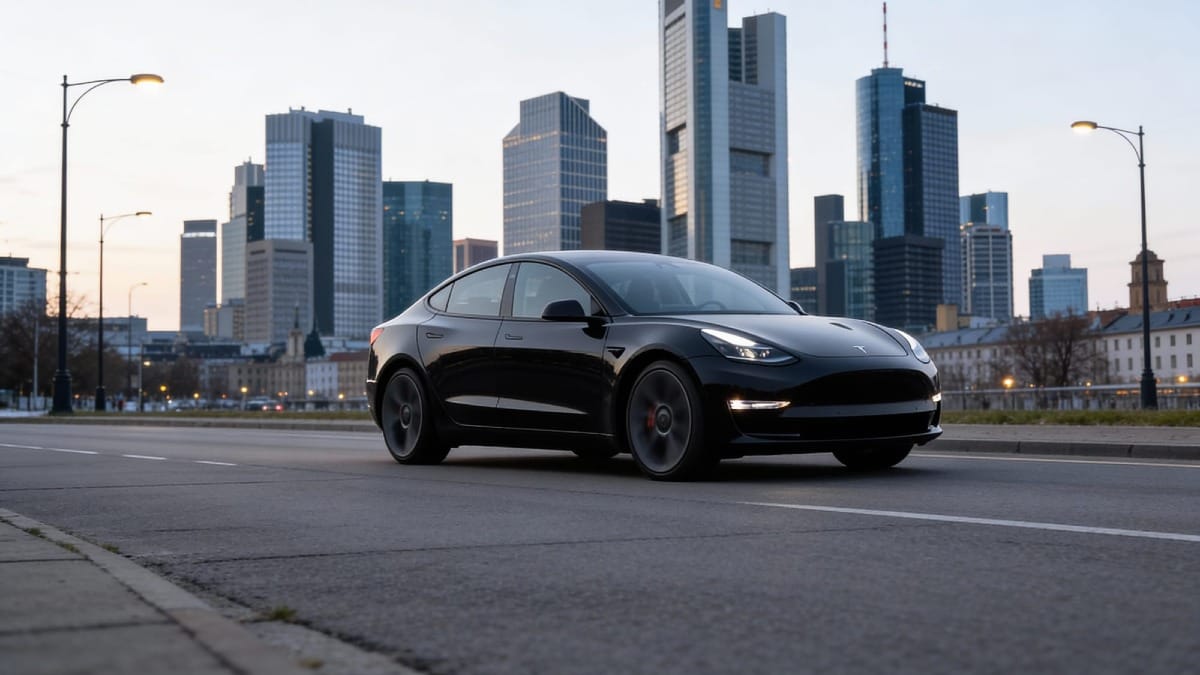
For any Turo host looking to enter the electric vehicle market, the Tesla Model 3 is usually the first car on the shopping list. It is the "iPhone" of cars—instantly recognizable, high in demand, and supported by a charging infrastructure that removes most of the "range anxiety" that scares off potential renters.
But once you decide on a Model 3, you face a critical financial fork in the road: Do you buy the Rear-Wheel Drive (Standard Range) or the Dual-Motor Long Range?
For personal car ownership, the Long Range is often a no-brainer. But in the cold, clinical world of Turo ROI, the "best" car is the one that puts the most profit in your pocket relative to its cost. Does the higher daily rate of a Long Range offset its much higher monthly payment?
Let’s dive into the data and settle the debate.
The Fundamental Difference: Specs vs. Sentiment
To understand the ROI, we first have to understand what the guest is actually paying for.
- The Standard Range (RWD): Typically offers around 272 miles of range and a 0-60 mph time of 5.8 seconds. Late-model versions (2021+) use a Lithium Iron Phosphate (LFP) battery.1 Turo hosts love LFP batteries because you can charge them to 100% every single day without significant degradation.2
- The Long Range (AWD): Boasts over 340 miles of range, All-Wheel Drive, and a blistering 4.2-second 0-60 mph time. It uses a Nickel Manganese Cobalt (NMC) battery.3 While technically superior in energy density, it should usually only be charged to 80% for daily use to preserve its lifespan.
The Reality Check: Most Turo guests do not know the difference between battery chemistries. They see a Tesla. However, they do see two specific numbers: Range and All-Wheel Drive.
The Purchase Price Gap (The Initial Investment)
As we move through late 2025, the used market has stabilized, but a significant gap remains between these two trims.
- Standard Range (Used 2021-2022): You can frequently find these for $22,000 to $25,000. If you qualify for the $4,000 Used EV Tax Credit, your effective cost can drop to under $20,000.
- Long Range (Used 2021-2022): These typically command $29,000 to $33,000. AWD and the larger battery hold their value better, meaning your "buy-in" is roughly $7,000 to $8,000 higher than the Standard model.
The ROI Impact: That $8,000 gap represents a significantly higher monthly loan payment—roughly $150 to $200 more per month. To make the Long Range "worth it," you need to earn at least $2,400 more in annual profit just to break even with the Standard model.
Revenue Comparison: Daily Rates and Utilization
Does a Long Range actually earn more per day? The answer depends heavily on your location.
In "Sunshine" Markets (LA, Miami, Phoenix)
In cities where the weather is perfect and the terrain is flat, the Long Range rarely commands a significant premium. A guest in Los Angeles driving to Santa Monica doesn't care about 340 miles vs. 272 miles.
- Standard Rate: ~$65/day
- Long Range Rate: ~$72/day
- The Verdict: The $7/day difference isn't enough to cover the higher loan payment. In these markets, the Standard Range is the ROI winner.
In "Adventure" or Cold Markets (Denver, Salt Lake City, Chicago)
Here, the game changes. All-Wheel Drive is a "search filter" for many guests. If it’s snowing in Denver, a RWD Tesla is a liability. Furthermore, cold weather can zap 30% of an EV's range. A guest driving to a ski resort needs that extra Long Range buffer.
- Standard Rate: ~$70/day (but lower utilization in winter)
- Long Range Rate: ~$95/day (high utilization year-round)
- The Verdict: In these markets, the Long Range can earn $500–$800 more per month, easily justifying the higher purchase price.
The "Free Fuel" and Charging Factor
One often overlooked benefit of the Long Range is the guest's perception of value. On Turo, guests are responsible for returning the car with the same charge level. Because the Long Range has a larger "tank," guests feel they can go further before having to find a Supercharger.
This leads to longer trip durations. 2025 data shows that Long Range Teslas average 4.1 days per trip, while Standard Range models average 3.2 days. Fewer turnovers mean less time you spend cleaning and repositioning the car—increasing your hourly ROI.
Maintenance and Longevity Secrets
- Tires: Teslas eat tires.4 The Long Range is heavier and more powerful, meaning it will likely go through a set of tires every 20,000 miles compared to the Standard’s 25,000 miles.
- Battery Degradation: The Standard Range LFP battery is a tank. You can tell guests to "charge to 100%" in your automated messages without worry. With a Long Range, guests will charge to 100% even if you tell them not to, which can lead to slightly faster degradation over a 3-year Turo lifespan.
- Suspension: Older Model 3s (2018-2021) are known for upper control arm issues.5 Always budget about $300-$500 for this repair if your car is approaching 60,000 miles.
The Psychology of the Renter
Guests often filter for "All-Wheel Drive" or "Long Range" without fully understanding their needs. In destination markets, the "Long Range" badge acts as an insurance policy for the guest's vacation. They are willing to pay a 20% premium for the peace of mind that they won't get stuck in a charging queue while trying to catch a flight.
Conversely, the Standard Range appeals to the "Commuter" renter—the person whose car is in the shop and just needs to get to work. These guests are more price-sensitive and less likely to book "Extras" or pay for premium delivery.
Final Head-to-Head ROI Calculation
Assuming a 20-day monthly utilization in a mid-tier market (e.g., Atlanta or Dallas):
| Metric | Standard Range (RWD) | Long Range (AWD) |
| Est. Purchase Price | $24,000 | $32,000 |
| Monthly Loan (approx.) | $450 | $620 |
| Avg. Daily Rate | $68 | $85 |
| Monthly Gross Revenue | $1,360 | $1,700 |
| Net after Turo (75% plan) | $1,020 | $1,275 |
| Cash Flow after Loan | $570/mo | $655/mo |
| Annualized ROI | ~28.5% | ~24.5% |
The Winner? It Depends on Your Goal.
- If you want the highest PERCENTAGE return: Buy the Standard Range. The lower purchase price makes your ROI percentage much higher, especially if you snag a used model that qualifies for the federal tax credit. It is the "purest" business play.
- If you want the highest TOTAL DOLLAR profit: Buy the Long Range. While the ROI percentage is slightly lower because of the high buy-in, the actual cash hitting your bank account every month is higher. It also offers more "resale protection"—AWD Teslas are much easier to sell to the general public when you’re ready to cycle the car out of your fleet.
Host Strategy for 2026
The "secret" for the coming year is finding 2021 Long Range models with high mileage (60k-70k). These have already taken their biggest depreciation hit, but the battery and motors are built to last 300k+ miles. This narrows the price gap with the Standard Range, making the Long Range the undisputed king of both cash flow and total profit.