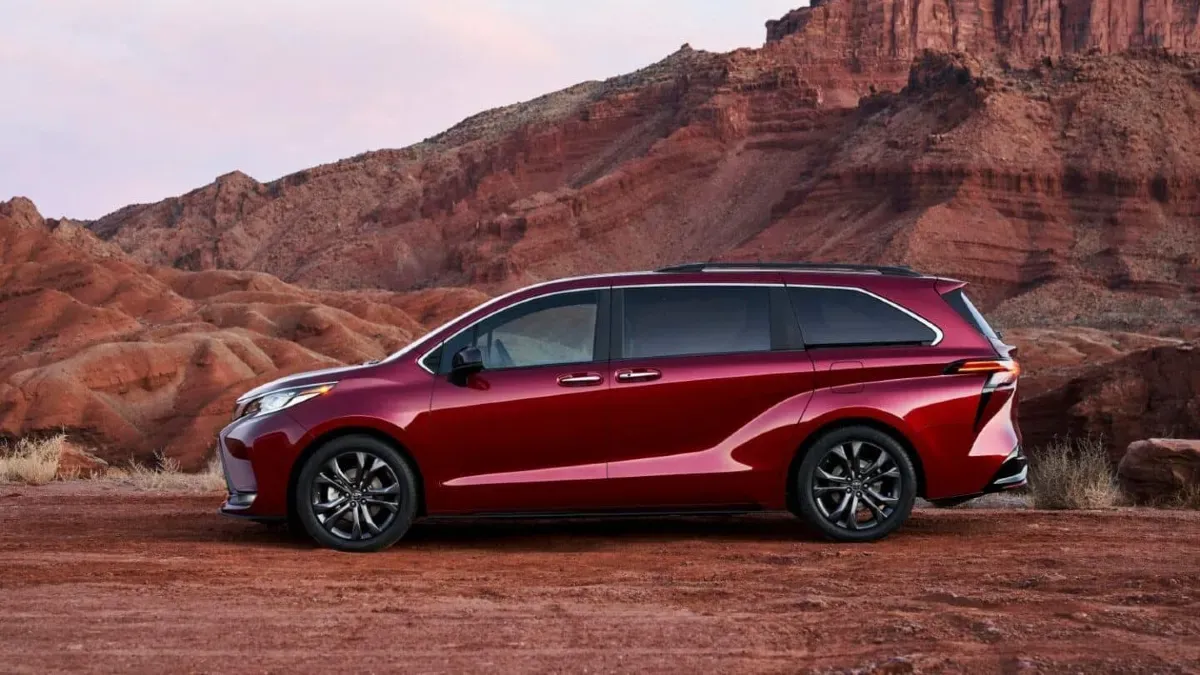
Let’s be honest for a second—nobody wakes up at 16 years old dreaming of owning a minivan. They aren't "cool." But do you know what is cool? An asset that pays for itself and puts $600+ of passive income in your pocket every single month.
In the rather interesting world of Turo, "flashy" often means "risky." You buy a sports car, and you attract renters who want to drive fast. You buy a 2021+ Toyota Sienna Hybrid, and you attract a dad from Ohio who just wants to get his family to Disney World without going bankrupt on gas.
The Toyota Sienna Hybrid is currently the "unicorn" of Turo fleets because it solves the renter’s biggest pain point (gas prices) while solving the host's biggest pain point (reliability). Here is why this unsexy vehicle might just be the most profitable asset you ever buy.
Why the Sienna Hybrid is a Turo Cheat Code
The 2021 redesign changed everything. By making the hybrid powertrain standard, Toyota created a vehicle that fundamentally breaks the math of rental cars.
1. The 36 MPG Factor
Most minivans like the Honda Odyssey or Chrysler Pacifica get around 20–22 MPG in the real world. The Sienna gets a combined 36 MPG. Think about the renter's psychology: If a family is planning a 1,000-mile road trip, renting your Sienna saves them roughly $100–$150 in fuel compared to the competition.
That is a massive value proposition that allows you to charge a higher daily rate while still looking like the "smart" choice. Real-world tests show that even fully loaded on highway trips, owners are seeing consistently high efficiency.
2. All-Wheel Drive (AWD)
Unlike most minivans, the Sienna offers AWD. This turns your van into a four-season earner. In the summer, it’s a road-trip machine; in the winter, it’s a ski-trip shuttle. That versatility keeps your utilization high year-round.
3. "Bulletproof" Reliability
Toyota’s hybrid system is legendary. We are talking about an engine that is designed to go hundreds of thousands of miles with just basic maintenance. While other hosts are dealing with transmission issues or turbo failures, you are just doing oil changes.
The ROI Breakdown: What Can You Actually Make?
Let's look at the numbers. While economy cars like the Chevy Spark technically have a higher percentage ROI (because they are so cheap), their actual cash flow is low—often netting just a few thousand dollars a year. The Sienna plays a bigger game.
- Acquisition Cost: You are looking at $40k – $45k for a solid LE or XLE model.
- Daily Rate: consistently sits between $90 – $150/day depending on your market and season.
- Utilization: Family rentals are sticky. Unlike a weekend sports car rental (2 days), families often book for 5–7 days at a time.
The Monthly Math (Conservative Estimate):
- Revenue: 15 days booked @ $100/day = $1,500
- Loan Payment: ~$700
- Insurance/Maintenance: ~$200
- Net Profit: ~$600/month
That is a healthy chunk of cash flow for a car that holds its value incredibly well. Some hosts report netting over $700/month per vehicle after all expenses.
The Trim Level Wars: LE vs. XLE
This is the most common question new hosts ask: "Should I buy the base model or the upgrade?"
The "Value King": LE (Base Model)
The LE is the cheapest way to get into the game. It has the same engine, same MPG, and seats 8 people, which is a huge selling point for larger groups.
The only problem is that it has cloth seats.
If a kid spills a red Gatorade on cloth seats, your van is out of commission for a day while you shampoo it.
The "Host Favorite": XLE (The Sweet Spot)
The XLE costs about $3k–$5k more, but it pays for itself in sanity.
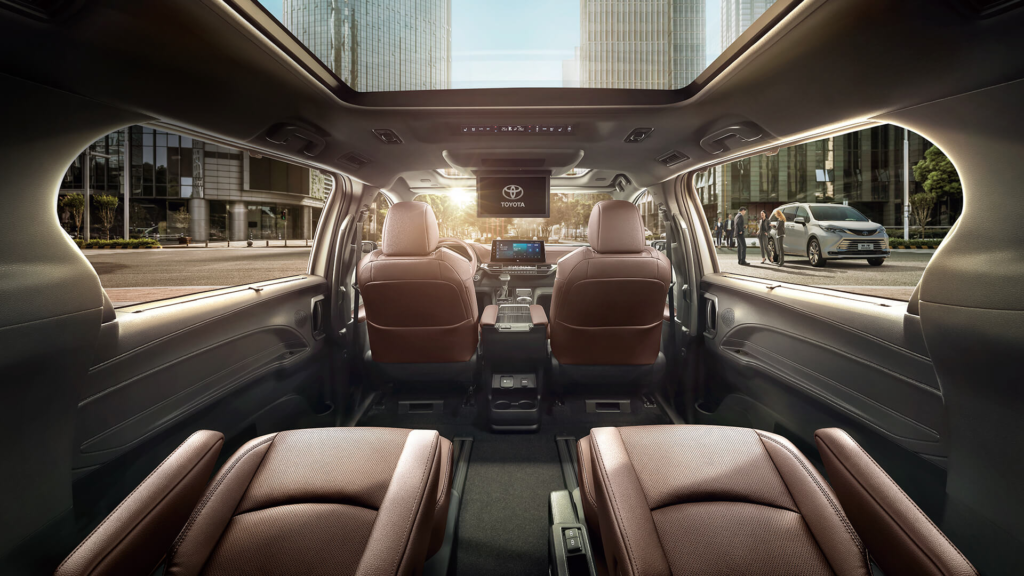
- Why it wins: SofTex Seats (Faux Leather). This is non-negotiable for many experienced hosts. Vomit, juice, and chocolate wipe right off.
- Key Features: It also comes with power sliding doors and a power liftgate (standard), which prevents renters from forcing the doors open manually and breaking the motors.
The "Avoid": Platinum/Limited
Don't bother. You pay $10k+ extra for features like a Head-Up Display or fancy rims. Renters will not pay you $50 extra a day for those features. Stick to the XLE.
The "Family Factor": Pros & Cons
Hosting a minivan means dealing with a very specific type of customer.
The Good: Safer Drivers
You aren't renting to a 22-year-old who wants to impress his date. You are renting to a dad with his wife and three kids in the back. They drive cautiously. They don't do burnouts. They treat the car as a tool to protect their family.
The Bad: The Mess
Let’s be real—kids are messy. Experienced van hosts report that minivans require 3x to 4x more cleaning effort than normal sedans. You will find crumbs in places you didn't know existed, and "sticky" is just the default state of the cupholders.
Strategic Host Tips for the Sienna
Here are some tips for maximizing the Sienna and squeezing out every little coin.
- Price for Profit: Don't price-match the old Dodge Grand Caravans in your area. You have a Hybrid. Make sure your listing title says "36 MPG Hybrid" so renters know they are saving money on gas.
- The "Upsell" Bundle: Since you know your customer is a parent, offer "Extras" that make their life easier. Child seats ($20/trip) and coolers are easy money.
- Show the Space: In your photos, show the trunk with the third row up and with the third row down. Parents need to know if their stroller fits.
Conclusion
The Toyota Sienna Hybrid isn't a car you buy for passion; it's a car you buy for profit. It offers a rare combination of high daily rates, long trip durations, and low maintenance costs.
If you can handle the higher upfront cost compared to an economy car, the Sienna offers some of the most stable, recession-proof income on the platform. Just make sure you get those rubber floor mats—you’re going to need them.