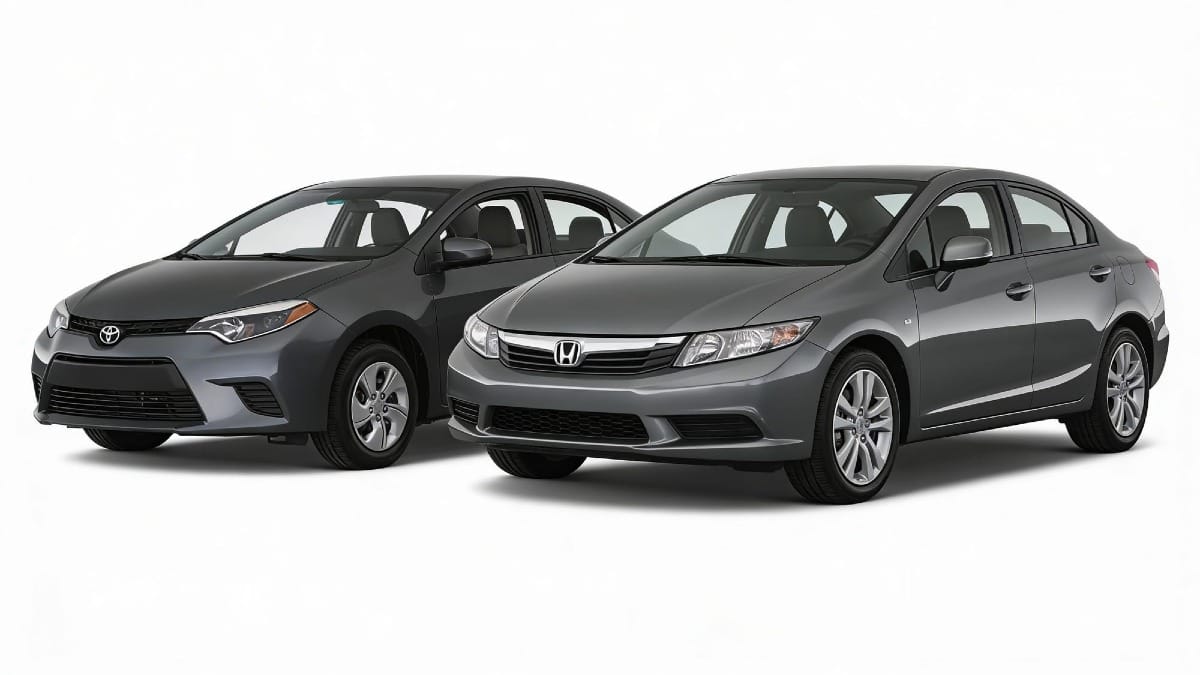
If you spend any time in Turo host circles, you’ll hear the same two names brought up constantly: the Toyota Corolla and the Honda Civic.
While exotic rentals and lifted Jeeps get all the Instagram likes, these two economy sedans are the actual engines that power the most profitable fleets in the world.
This year, the game has changed slightly with higher interest rates and shifting guest expectations, but the fundamental truth remains: if you want to build a sustainable, scalable business, you need a foundation of "Bread and Butter" cars.
But which one is actually better for your bottom line?
Is the legendary reliability of the Corolla enough to beat the premium appeal and higher daily rates of the Civic?
Let’s look at the data, the insurance landscape, and the "Month One" profit sheet to crown a winner.
Why Turo Hosts Love These Cars
Before we compare them, we have to understand why these two models dominate the platform. If you look at the top-performing "Power Hosts," they almost always have a fleet anchored by these sedans.
1. Maximum Utilization
Unlike a luxury Porsche or a niche off-road Jeep, everyone knows how to drive a Corolla. These cars appeal to the widest possible audience—from business travelers on a budget to families needing a reliable airport car. This leads to 75–85% utilization rates. In this business, a car that sits in your driveway is a liability; a car that stays on the road is an asset.
2. Weather and Market Proof
These cars rent just as well in a rainy November as they do in a sunny July. They aren't "seasonal" assets. This provides the steady, predictable cash flow needed to cover your fixed costs like insurance, storage, and software subscriptions.
3. The "Double Life" Longevity
Both models are famous for the 200,000-mile club. For a host, this is gold. You can buy a Corolla with 50,000 miles, run it on Turo for three years until it hits 120,000, and still sell it for a significant amount because the used market trusts the longevity of these engines.
4. Low Operational Friction
These cars are easy to clean, easy to park, and simple for guests to operate. This reduces the number of "How do I turn on the headlights?" or "How do I connect Bluetooth?" messages you receive at 2:00 AM.
The "Month One" Profit Sheet (Real 2025 Projections)
To see the math in action, we have to look at the numbers. This assumes you are purchasing a used 2019 model, using the Turo 75 Plan, and operating in a mid-tier market (like Charlotte, Phoenix, or Dallas).
| Monthly Metric | Toyota Corolla (2019) | Honda Civic (2019) |
| Average Purchase Price | $14,500 | $16,500 |
| Days Booked (Avg 75%) | 22 Days | 22 Days |
| Daily Rate (Market Avg) | $42 | $45 |
| Gross Monthly Revenue | $924 | $990 |
| Turo Take (75% Plan) | $693 | $742 |
| Off-Trip Insurance (ABI/Lula) | -$110 | -$110 |
| Maintenance Reserve | -$50 | -$55 |
| Monthly Net Profit | $533 | $577 |
| Annualized ROI (Cash Purchase) | 44.1% | 41.9% |
The Financial Takeaway: While the Civic brings in about $44 more per month in net profit, the Corolla actually has a higher ROI percentage because your initial investment was $2,000 lower. In a fleet-scaling scenario, that $2,000 difference is half of the down payment on your next vehicle.
The "Golden Years" to Buy (2025 Guide)
You cannot just buy any Corolla or Civic and expect these numbers. You need to hit the "sweet spot" of the depreciation curve—where the car has lost its initial "new car" hit but still has the tech guests demand.
Toyota Corolla: The Reliability Sweet Spot
- The "Value" Choice (2017–2019): This generation is essentially unkillable. 2017 was the first year Toyota Safety Sense became standard, giving guests adaptive cruise control and lane departure alerts. Even today, guests love these features for highway driving.
- The "Modern" Choice (2020–2022): 2020 was the first year Apple CarPlay became standard in the Corolla. In 2025, guests view CarPlay as a requirement. If your car doesn't have it, your ratings and utilization will suffer.
- Avoid: 2014–2016 models. While reliable, they feel "dated" inside and lack the safety tech that makes guests feel secure.
Honda Civic: The Experience Sweet Spot
- The "Value" Choice (2014–2015): If you are on a razor-thin budget, the 9th-generation Civic is a tank. It’s simple and cheap to fix. You’ll just need to add an aftermarket CarPlay head unit ($200) to keep guests happy.
- The "Modern" Choice (2019–2021): This is the 10th-gen Civic at its peak. Honda fixed early A/C compressor issues and engine "oil dilution" bugs by 2019. These cars look "expensive" to guests but are currently sitting in a very reasonable price range.
- Avoid: The 2016 model. It was the first year of the redesign and suffered from the most electronic glitches and recalls.
The Hidden Cost: Insurance and Protection
This is where most new hosts fail. You cannot simply use your personal Geico or State Farm policy. If they find out you are using the car for Turo, they will likely deny your claim and cancel your policy.
To stay protected in 2025, you need the "Two-Layer" approach.
1. On-Trip Protection (Via Turo)
When a guest is driving, Turo’s contract with Travelers kicks in. You choose a plan (60, 75, 80, 85, or 90).
- The 75 Plan (The Pro Choice): You keep 75% of the earnings, and your deductible is only $250.
- Why it matters: A minor bumper scuff on a Civic might cost $900 to fix. On the 90 plan ($2,500 deductible), you pay for that entirely out of pocket. On the 75 plan, you only pay $250. For economy cars that get dinged up in parking lots, the 75 plan is the only way to protect your margins.
2. Off-Trip / "Gap" Insurance
This covers you when the car is not on a trip (e.g., you're driving to the mechanic).
- ABI (American Business Insurance): Their Period X policy is the gold standard. It costs about $110/month and is built specifically for Turo fleets.
- Lula (via Tint): Turo's official partner for 2025. It starts around $89/month for hosts with 3+ cars.
- Roamly: The best choice for the "casual" host with 1–2 cars who wants a personal-style policy that allows for car-sharing.
Where to Buy: Sourcing Your Fleet
Finding the right car at the right price is what actually secures your ROI. Avoid the "Retail Trap" of traditional dealerships with high doc fees.
- Hertz and Enterprise Car Sales: These cars have a documented maintenance history from day one. In 2025, Hertz Car Sales often lists "no-haggle" prices that are 5% below market. Use their Rent2Buy program to test the car for three days before you buy it.
- Facebook Marketplace: The only way to get a true "steal." Look for "Single Owner" listings where the seller has all service records. In 2025, many people are selling 2019 models to upgrade to EVs—be ready to move fast with cash.
- AutoTempest: This is the best aggregator tool. Set a "Clean Title" and "Under 75,000 Miles" filter. If a Corolla or Civic is priced "Great" on CarGurus, it will be gone within 48 hours.
Guest Experience: The Review Makers
A five-star review isn't about the engine; it’s about the experience.
- Driving Dynamics: The Civic wins here. It feels athletic and modern. The Corolla feels like a "tool." Solo business travelers prefer the Civic, while airport travelers love the Corolla’s boxier trunk for suitcases.
- The Gear You Need:
- GPS Tracker: Use Bouncie. It alerts you if a guest is "redlining" the engine or speeding, allowing you to stop abuse before it turns into a mechanical failure.
- All-Weather Floor Mats: These are non-negotiable. They save your carpet from the inevitable coffee spill or beach sand.
- "No Smoking" Stickers: Professional stickers on the dash act as a psychological barrier. Smoke removal is your biggest time-waster; prevention is key.
Final Verdict: Who Wins for ROI?
If you are looking for the absolute best starter car for Turo in 2025, the Toyota Corolla (2017–2019) on the 75 Plan is the winner.
While the Civic is "cooler" and can command a slightly higher daily rate, the Corolla’s lower entry cost and bulletproof reliability translate directly into less downtime. In the Turo business, downtime is the silent profit killer. By spending less to buy it and less to fix it, you reach "pure profit" months earlier than you would with a Civic. The Corolla isn't just a car; it's the most stable financial instrument you can put on four wheels.